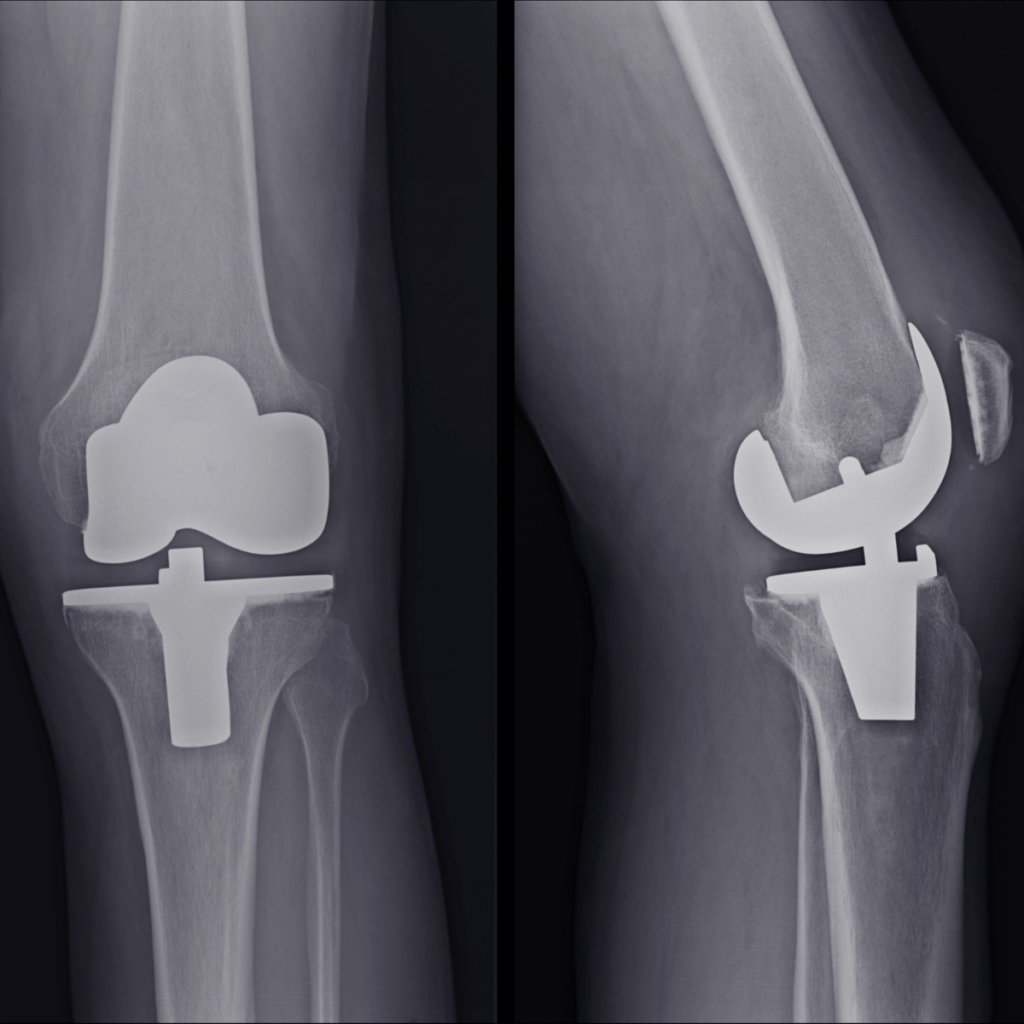
Knee Replacement Surgery Overview
Knee replacement surgery (Total Knee Replacement – TKR) is a procedure in which damaged or worn-out surfaces of the knee joint are replaced with artificial implants. It is primarily used to relieve pain and restore function in patients with:
Severe osteoarthritis
Rheumatoid arthritis
Post-traumatic arthritis
Knee deformities affecting mobility
Modern techniques, including minimally invasive surgery, robotic-assisted surgery, and rapid recovery protocols, help patients regain mobility faster with less pain.

Types of Knee Replacement
Total Knee Replacement (TKR) – Replaces the entire knee joint.
Partial Knee Replacement (Unicompartmental) – Replaces only the damaged portion of the knee.
Revision Knee Replacement – For patients with failed or worn-out previous knee implants.
Surgical Procedure
Damaged cartilage and bone are removed
Metal and plastic implants are fitted to restore knee alignment
Advanced options like robotic-assisted surgery ensure precise implant placement
Taking action early is the key to preventing chronic pain and protecting your knee joint for the future.
Benefits
Significant pain relief
Restored knee function and stability
Corrected deformities (bow legs or knock knees)
Improved mobility and quality of life
Recovery
Early physiotherapy to regain motion
Gradual weight-bearing and strengthening exercises
Most patients resume daily activities within 4–6 weeks
Full functional recovery typically in 3–6 months
Consult Dr. Faiz Ahmad
Dr. Faiz Ahmad is a specialist in knee replacement surgery, offering:
- ✔ Total and partial knee replacement
- ✔ Revision knee replacement
- ✔ Robotic and computer-assisted surgery
- ✔ Rapid recovery protocols for faster rehabilitation
- ✔ Personalized treatment planning for optimal outcomes